blogs
MSKVY 2.0 Explained: Maharashtra's Feeder Solarisation Scheme and the Two Ways In
5 Aug 2026 • SLNKO Research Desk • 9 min read
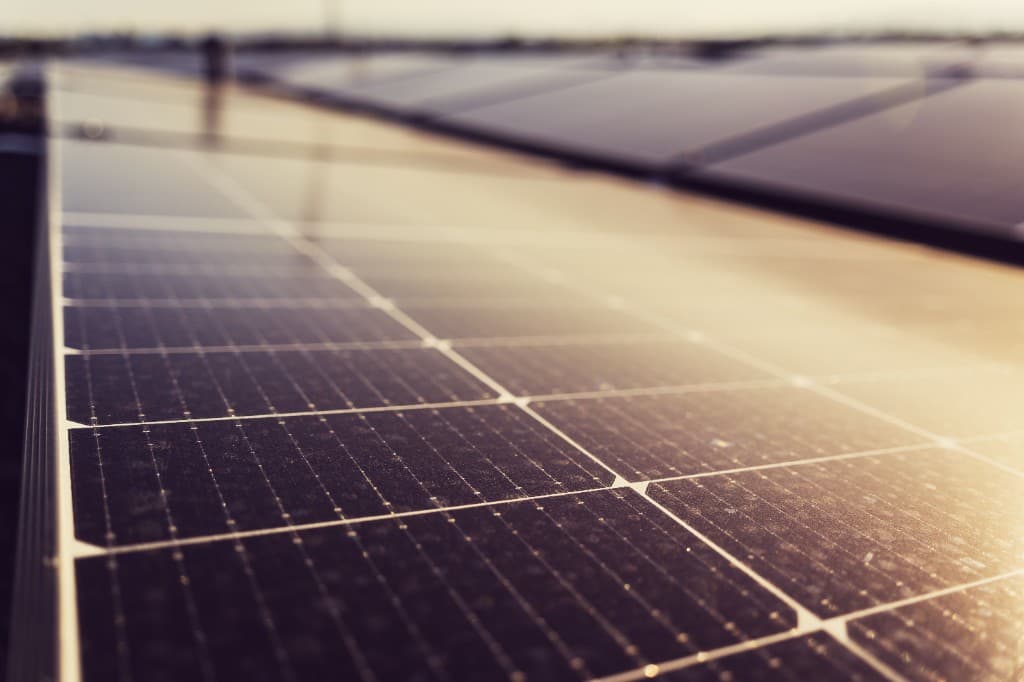
Maharashtra runs one of the largest agricultural power loads in the country - around 45 lakh agricultural connections drawing roughly 22% of the state's electricity, much of it supplied at night and at deeply subsidised tariffs. The Mukhyamantri Saur Krushi Vahini Yojana 2.0 is the state's structural answer: put solar generation next to the substations that feed farms, and shift agricultural supply to daytime.
With applications now open, this is what the scheme contains, how the two allocation routes differ, and what a developer needs before applying. For a side-by-side with the national farm-solar scheme, see MSKVY 2.0 vs PM-KUSUM.
MSKVY 2.0 at a glance
| Parameter | Detail |
|---|---|
| Programme | Mukhyamantri Saur Krushi Vahini Yojana 2.0 (MSKVY 2.0) |
| Objective | Daytime power for agricultural consumers via decentralised solar near farm feeders |
| Capacity target | 16,000 MW (raised from the original 7,000 MW under Mission 2025) |
| Project size | 0.5 MW to 25 MW per project |
| Siting | Within a 5-10 km radius of agriculture-dominated distribution substations |
| Injection voltage | 11 kV, 22 kV or 33 kV, locally at the substation |
| Offtake | 25-year Power Purchase Agreement with MSEDCL |
| Allocation routes | Competitive bidding, and a Memorandum of Understanding (MoU) route |
| Performance security | Bank Guarantee of ₹5 lakh per MW |
| Implementing agencies | MSEB Solar Agro Power Limited (MSAPL) as nodal agency; MEDA providing technical facilitation |
What the scheme is, and why it exists
Maharashtra first launched MSKVY in June 2017, allowing decentralised projects of 2 to 10 MW within a 5 km radius of agriculture-dominated substations. In May 2023 the state reframed it as MSKVY 2.0, widening the project band to 0.5-25 MW and the siting radius to 5-10 km, and setting a Mission 2025 objective of solarising 30% of agricultural feeders through 7,000 MW of fast-track capacity. A subsequent government resolution in September 2024 raised the target to 16,000 MW, making it among the largest distributed solar programmes in the country.
The rationale is not primarily environmental. Four structural pressures drove it:
- Subsidy and cross-subsidy burden. Agricultural supply at subsidised rates is funded partly by higher tariffs on commercial and industrial users, which weighs on both MSEDCL's finances and the state's industrial competitiveness.
- Night-time supply. Load management pushed farm feeders to night-time energisation, requiring farmers to irrigate in unsafe and inconvenient conditions.
- Power purchase cost. MSEDCL needed cheaper generation to bring down its average cost of supply.
- Renewable obligations. The utility must meet Renewable Purchase Obligations, including a distributed renewable component that feeder-level solar directly serves.
Siting generation next to load addresses all four simultaneously, and reduces transmission and distribution losses in the process. It is worth noting that MSKVY 2.0 was originally structured under Component C of the central PM-KUSUM programme but has since been de-linked, and now runs as a state scheme with its own tariff and procurement framework. How the two programmes differ on eligibility, subsidy and who they fit is covered in MSKVY 2.0 vs PM-KUSUM.
The two routes to capacity
Both routes end at the same place - a 25-year Power Purchase Agreement (solar PPA) with MSEDCL, with performance security of ₹5 lakh per MW. They differ in how capacity is allocated and how the tariff is set.
Competitive bidding
The original and continuing route. MSAPL and MSEDCL float tenders, substation-wise or in clusters, and the tariff is discovered through an e-reverse auction under a MERC-approved ceiling. The lowest bidder wins the capacity. The ceiling tariff was revised down to ₹2.90 per unit in 2026, and recent rounds have cleared below that.
The MoU route
To move the remaining capacity toward the 16,000 MW target without waiting on successive auction cycles, MSEDCL opened an MoU route allocated on a first-come, first-served basis. A developer proposes a capacity at an identified substation and, subject to meeting the scheme's criteria, signs an MoU and proceeds toward a PPA. The tariff is MERC-determined and fixed rather than bid. Applications are made online through MSEDCL's MSKVY 2.0 MoU Route portal, and applicants must clear a financial eligibility gate covering net worth and liquidity per MW. For the full eligibility thresholds, document list, fees and 10-step application flow, see our guide to MSKVY 2.0 MoU route eligibility.
Side by side
| Competitive bidding | MoU route | |
|---|---|---|
| Allocation | Lowest bidder (L1) wins the capacity | First-come, first-served against available substation capacity |
| Tariff | Discovered by e-reverse auction under a MERC ceiling | MERC-determined and fixed |
| Price outcome | Depends on auction pressure; can fall well below ceiling | Known before commitment |
| Timeline | Tender cycle plus reverse auction | No auction cycle; depends on application processing |
| Competitive variable | Price | Speed and completeness of application |
| Offtake | 25-year PPA with MSEDCL | 25-year PPA with MSEDCL |
| Performance security | ₹5 lakh per MW | ₹5 lakh per MW |
Evaluating a substation or parcel for MSKVY 2.0? Send us the district, target substation and approximate land available - Talk to our team.
One regulatory point worth knowing
MERC has been explicit that competitive bidding remains the norm for power procurement, and that the MoU route - adopted to give MSKVY 2.0 momentum - should not be treated as a precedent for future renewable procurement. The Commission has also raised concerns about the pace of contracted capacity actually reaching commissioning.
For a developer, that has a practical implication in both directions. It means the MoU window should not be assumed to remain open indefinitely, which argues for readiness rather than deliberation. It also means allocations obtained through it are likely to be scrutinised on execution, so a developer who takes capacity and then stalls is more exposed than the low headline barrier to entry suggests.
What a developer actually needs
Neither route is won on paperwork alone. Across both, the same four things determine whether an allocation converts into a commissioned asset.
Site control near a viable substation. The siting radius is narrow, and the substations with available capacity are published. Land within that radius must be aggregated, title-clear and suitable - which in practice usually means a solar power plant on agricultural land, with the conversion and tenure questions that brings.
Evacuation certainty. Available bay capacity at the target substation is the constraint that most often kills otherwise sound projects. It should be confirmed before land is committed, not after.
A defensible generation and cost model. With the tariff fixed under the MoU route and bid-compressed under the auction route, returns are determined almost entirely by landed cost and yield. A properly built DPR - resource assessment, geotechnical picture, single-line diagram, generation estimate - is what makes the financing case, and engaging a solar DPR consultant early is the cheapest risk reduction available.
An execution route that fits the portfolio. MSKVY projects are usually multiple ground-mount sites rather than one large plant, which changes how procurement and construction are best structured. Our comparison of solar EPC and EPCM delivery models covers the trade-offs in detail, including when a ground mounted solar EPC approach or an EPCM service fits better.
Where projects stall
- Land aggregated before substation bay capacity was confirmed.
- Title and conversion issues on agricultural parcels surfacing after the MoU is signed.
- Bank guarantee mechanics - the e-BG process has specific documentation requirements that delay otherwise complete applications.
- Underestimating the interconnection scope, which sits outside the solar plant but inside the schedule.
- Treating a fixed tariff as a guaranteed return without stress-testing generation assumptions.
Working on an MSKVY 2.0 project?
SLNKO Energy is an engineering-led EPCM and PMC partner with over 10 GW+ of solar capacity delivered across 19 states, including work under PM-KUSUM and other government programmes. We support substation and site evaluation, DPR and pre-bid engineering, EPCM execution, public sector PMC and long-term O&M.
Evaluating a substation or a parcel?
Send us the district, target substation and approximate land available. We will come back with an indicative view on viability before you commit capital. Talk to our team.
Model the returns: SLNKO ROI Calculator | See delivered capacity: View portfolio
Phone: +91 62025 28672 | WhatsApp: +91 87962 60069 | Email: Contact us
Office: B-26, Block B, Sector 6, Noida, Uttar Pradesh 201301
Official scheme resources: MSEDCL MSKVY 2.0 portal · MoU route application portal
Frequently Asked Questions
What is MSKVY 2.0?⌃
Mukhyamantri Saur Krushi Vahini Yojana 2.0 is a Government of Maharashtra programme to install decentralised, grid-connected solar plants near agriculture-dominated distribution substations, so that farm feeders can be supplied with daytime power. MSEDCL procures the generation under 25-year PPAs. The capacity target is 16,000 MW.
What is the MSKVY 2.0 MoU route?⌃
An allocation channel in which capacity at an identified substation is allotted on a first-come, first-served basis at a MERC-determined fixed tariff, rather than through competitive auction. Applications are made online through MSEDCL's MSKVY 2.0 MoU Route portal, subject to a financial eligibility check. For net worth, liquidity, documents and the application process, see MSKVY 2.0 MoU route eligibility.
What project sizes are allowed under MSKVY 2.0?⌃
Projects range from 0.5 MW to 25 MW, sited within a 5 to 10 km radius of an agriculture-dominated distribution substation, with power injected locally at 11 kV, 22 kV or 33 kV.
What is the tariff under MSKVY 2.0?⌃
Under the bidding route the tariff is discovered by e-reverse auction beneath a MERC-approved ceiling, revised to ₹2.90 per unit in 2026. Under the MoU route the tariff is MERC-determined and fixed. Confirm current figures against MSEDCL and MERC documents before modelling.
Is MSKVY 2.0 part of PM-KUSUM?⌃
It was originally structured under Component C of the central PM-KUSUM scheme but has since been de-linked, and now operates as a Maharashtra state programme with its own tariff and procurement framework. For a fuller comparison of objectives, subsidy and who each scheme fits, see MSKVY 2.0 vs PM-KUSUM.
What performance security is required under MSKVY 2.0?⌃
A bank guarantee of ₹5 lakh per MW, submitted as an electronic bank guarantee through the prescribed process. Both allocation routes carry the same requirement.
Scheme terms, tariffs and eligibility criteria are set by MSEDCL and MERC and are subject to revision. Verify all figures against the official scheme documents before making commercial decisions. Figures current as of 5 August 2026.