blogs
Open Access Charges in India: The Cost Stack That Decides the Economics
16 Aug 2026 • SLNKO Research Desk • 15 min read
OPEN ACCESS SERIES · PART 03 · SLNKO RESEARCH DESK
"If renewable energy is cheaper, why are there so many additional charges?" It's one of the first questions businesses ask when evaluating an open access project, and it's a fair one. Terms like wheeling charges, cross-subsidy surcharge, additional surcharge, banking charges and scheduling charges can look, at first glance, like hidden costs eating into the promised savings.
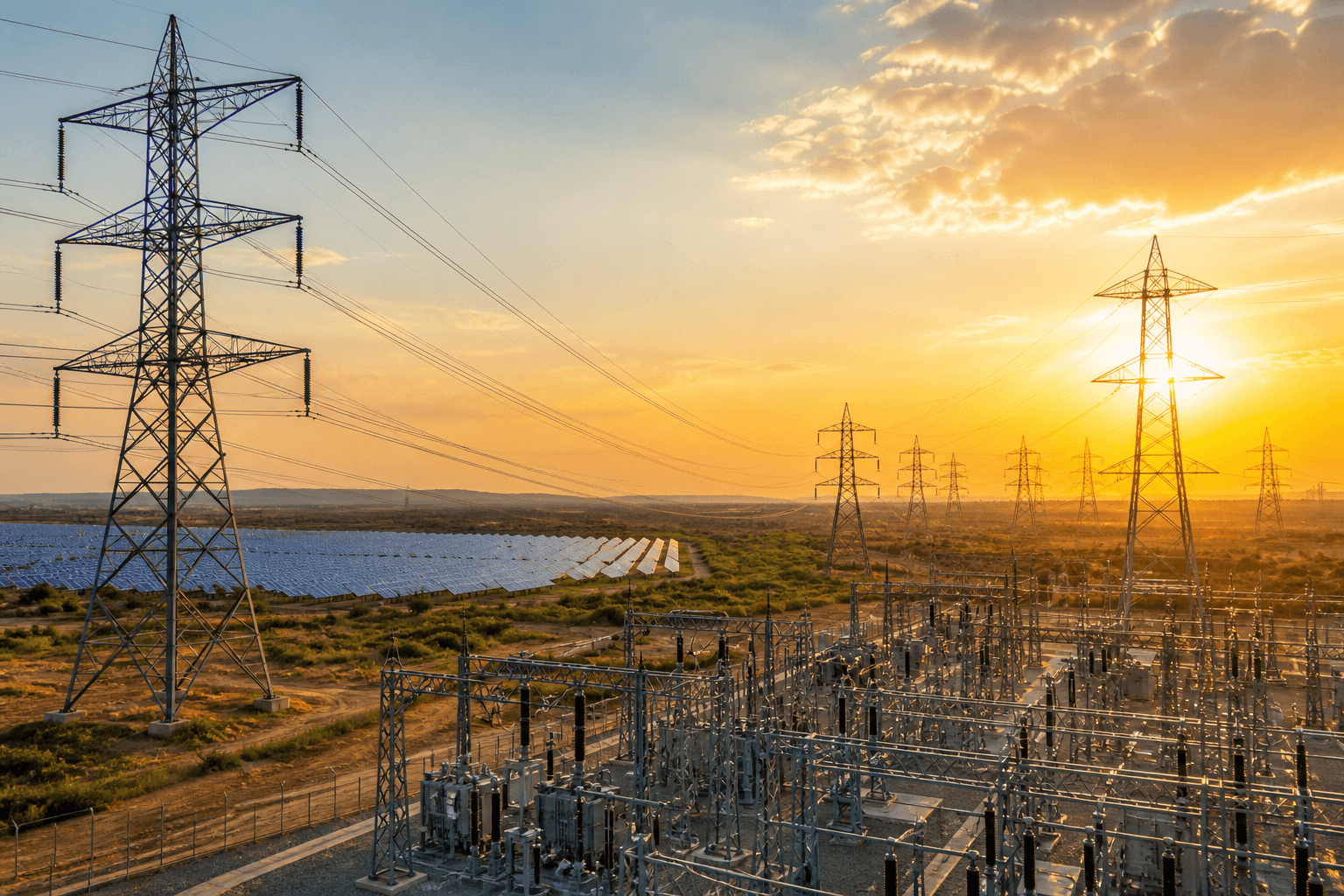
They aren't arbitrary. Open access power still travels over transmission lines, substations, transformers and distribution networks that have been built and are maintained over decades, by different entities, regardless of where the electricity was generated. A renewable developer generates the power; transmission utilities carry it over long distances; the local distribution company delivers it the final stretch; load despatch centres keep the whole system scheduled and balanced. The charge stack is how each of those participants gets compensated for the role it plays.
The previous post in this series set out the three models through which consumers use open access, and it kept returning to the same point: what really separates them is the charges. This post opens that box. When a consumer buys power over open access, the price agreed with the generator is only the beginning of the cost - and it is the stack sitting on top of it, far more than the headline energy price, that decides whether an arrangement saves money or quietly fails to.
The single most useful idea to hold on to is landed cost: the energy price plus every charge levied along the way, expressed as a rupee-per-unit figure that can be set against the grid tariff the consumer would otherwise pay. The saving from open access is the gap between the two. A low energy price means little if the charges close that gap, and the same project can be attractive in one state and unviable in another purely because the charges differ.
01 The charge stack at a glance
A typical open access arrangement carries most or all of the following. Not every charge applies to every project - which ones bite depends on the model, the source, the state, and how the power is routed.
- Energy charge - the negotiated price of the power itself, agreed with the generator or set on a power exchange. The base cost everything else stacks on
- Transmission charges - for using the high-voltage grid, in two layers: inter-state and intra-state
- Wheeling charges - for using the distribution network to carry power the final stretch to the premises
- Transmission and wheeling losses - a fraction of the power lost in transit, recovered in kind
- Cross-subsidy surcharge (CSS) - compensates the utility for the cross-subsidy lost when a paying consumer leaves its supply
- Additional surcharge (AS) - compensates the utility for its contracted but now unused, or stranded, capacity
- Banking charges - for storing surplus renewable energy with the grid and drawing it back later
- Standby charges - for backup drawn from the utility when the open access source is unavailable
- Scheduling and system operation charges - payable to the load despatch centre for scheduling and balancing
- Deviation settlement charges - for drawing more or less power than was scheduled
- Reactive energy charges - for the reactive power exchanged with the grid
- Electricity duty and cess - state government levies on consumption
- One-time charges - application and registration fees, connectivity charges, and metering
02 Network-use charges
These are the charges for physically moving power across the grid - the most intuitive part of the stack, because open access is at bottom the right to use wires a consumer does not own.
Transmission charges. These cover the high-voltage grid that carries power in bulk over long distances, in two layers. Inter-state transmission charges apply to power that travels over the national grid between states and are set by the central commission; intra-state transmission charges apply to movement within a state and are set by the state commission. A consumer buying from a distant, out-of-state plant pays the inter-state charge on top of the state one, while a consumer sourcing within its own state avoids it.
Wheeling charges. These cover the distribution network - the lower-voltage wires that carry power the final stretch into the consumer's premises. They are set by the state commission and usually expressed as a per-unit rate that depends on the voltage at which the consumer connects.
Transmission and wheeling losses. Moving electricity over any network loses a fraction of it as heat. Open access accounts for this by requiring the consumer's source to inject more than the consumer actually draws, with the shortfall fixed by the applicable loss percentages. Losses are easy to overlook because they are taken in kind rather than billed as a line on an invoice, but they are a real cost: the consumer pays for generation it never receives.
03 The two decisive surcharges
These two are usually the largest and the most variable charges in the stack, and they are the reason the choice of model, covered in the previous post, matters so much.
Cross-subsidy surcharge (CSS). This exists because of how retail electricity is priced. Utilities charge industrial and commercial consumers more than the cost of supply and charge households and farmers less, using the surplus from the former to subsidise the latter. When a large paying consumer leaves the utility's supply for open access, that cross-subsidy walks out of the door with it, and CSS is the charge that recovers it. It is set by each state commission using a formula in national policy - broadly the gap between what the consumer's category would have paid and the utility's own cost of supplying that power - and it varies by state, by category and often by voltage. In many states it is the single largest charge in the stack. National policy places a ceiling on how high it can go, but within that ceiling it is revised from one tariff order to the next.
Additional surcharge (AS). This addresses a different loss. Utilities sign long-term contracts to secure enough generation for their expected demand; when an open access consumer stops buying, the utility is still bound to pay for that now-idle, or stranded, capacity. The additional surcharge lets it recover those stranded fixed costs, and it is payable where the utility can demonstrate them. It is volatile - substantial in one period and close to nothing in the next as a state's supply position shifts - which makes it one of the harder charges to plan around.
A qualifying captive or group captive arrangement is exempt from both of these charges. Because they are usually the two heaviest, that exemption is the entire economic case for captive structures.
This is the link back to the models covered in Part 2. A qualifying captive or group captive arrangement is exempt from both the cross-subsidy surcharge and the additional surcharge, while a third-party consumer pays both in full. The same solar power, delivered the same way, can therefore cost meaningfully more or less depending only on whether the arrangement qualifies as captive - which is why so much effort goes into meeting and holding the 26% and 51% thresholds.
04 Operating charges
Beyond the network charges and the two surcharges sits a set of smaller charges tied to the day-to-day running of an arrangement. None is large on its own, but together they add a real layer to the landed cost.
Banking charges. Solar and wind generate when the sun shines and the wind blows, not necessarily when a factory needs power, so many arrangements bank surplus energy with the grid - injecting it when generation is high and drawing it back when demand is high. States allow this within limits and charge for it, usually as a percentage of the units banked. The terms vary widely and have been tightening: some states charge several times what others do, some restrict banking to monthly settlement, and at least one has effectively replaced it with fifteen-minute block scheduling that removes the cushion banking used to provide. For a renewable project, the banking regime can matter almost as much as the surcharges.
Standby charges. These cover the backup a consumer draws from the utility when its open access source is unavailable, compensating the utility for standing ready to supply at short notice.
Scheduling and system operation charges. Payable to the load despatch centre, these cover the work of scheduling the transaction and keeping the grid balanced. They are typically small, levied per unit or as a modest fixed charge.
Deviation settlement charges. When a consumer draws more or less than it scheduled, the difference is settled at a rate that varies with grid conditions - rewarding accurate forecasting and penalising sloppy planning.
Reactive energy charges. A small charge for the reactive power a consumer draws from or feeds back to the grid, which affects voltage and grid stability.
05 Statutory and one-time charges
Electricity duty and cess. State governments levy electricity duty, and in some states a further cess or tax, on consumption. These apply to open access power as they do to grid power. They sit outside the regulator's charge framework, but they are part of what a consumer actually pays, and they differ from state to state.
One-time charges. Setting up an open access arrangement also carries one-off costs: application and registration fees, connectivity or grid-connection charges, and the special energy meters that open access requires. These do not recur, but they belong in any honest assessment of what a project costs to start.
06 A moving target: the ISTS waiver
One element of the transmission charge deserves a section of its own, because it is both large and on a clock. For more than a decade, renewable power moving across state lines over the inter-state transmission system enjoyed a complete waiver of inter-state transmission charges - a large part of why solar and wind from resource-rich states, Rajasthan and Gujarat prominent among them, could be delivered cheaply to consumers across the country.
That waiver is now being withdrawn in steps. Projects commissioned up to the end of June 2025 keep a full waiver for 25 years; for those commissioned later the exemption falls on a graded schedule - broadly 75% for projects commissioned in the year to June 2026, 50% in the year to June 2027, 25% in the year to June 2028, and nothing after that.
As the waiver shrinks, inter-state transmission charges of the order of a rupee or more per unit return to the landed cost, and the effect has been to push many buyers toward sourcing within their own state, where the inter-state charge does not arise. This schedule is set centrally and has already been adjusted more than once, including relief for projects delayed by transmission infrastructure that was not ready in time - its precise terms should always be checked against the latest central orders before they are relied on.
Does the ISTS phase-out change your project economics?
If your open access plan depends on inter-state renewable supply, commissioning date now sits inside the cost model, not outside it. We can help you read the current waiver position against your state, voltage and offtake structure. Talk to our team.
07 Looking beyond individual charges
Many businesses initially fixate on a single line item - usually CSS or the additional surcharge - because those are the ones with the biggest headline numbers. But evaluating a project on any one charge in isolation can be misleading. The real financial picture depends on the combined effect of several things together:
- The renewable energy tariff itself
- Applicable network and surcharge components
- The consumer's actual consumption profile - how closely it matches the generation profile
- Banking provisions and how they're structured in that state
- Project generation performance over time
- The regulatory framework and how it is likely to move
- Contract structure and duration
- Future tariff escalation built into the agreement
- The project's full operating life, not just its first year
A comprehensive assessment weighs all of these together rather than treating any single charge as the deciding factor.
08 Why no two projects cost the same
By this point the reason open access charges resist a single headline number should be clear. The charges are set by different authorities - the central commission for the inter-state system and each state commission for everything within its borders - so the framework is national in outline but state-specific in every detail that matters. Within a state, the charges depend on the consumer's category and voltage level. And they are not fixed: commissions revise them through tariff orders, typically each year, so a landed cost that made a project viable can shift with the next order.
State commissions have also treated the determination of cross-subsidy surcharge with increasing independence from the main tariff process in some jurisdictions - a reminder of how live and contested this area remains. Always confirm the current order for the state in question rather than relying on a national average or a previous year's figure.
The practical consequence is that the landed cost of open access power has to be worked out project by project, for the specific state, category, voltage and year, and then rechecked as orders change. There is no substitute for a current, location-specific calculation.
Need a state-specific landed-cost view?
A generic charge list cannot tell you whether open access solar cost saving holds for your load and location. SLNKO runs the state-specific landed-cost calculation - energy price, applicable network and surcharge components, banking terms and model exemptions - so you can compare it against your current grid tariff before you commit. Talk to our team.
Phone: +91 62025 28672 | WhatsApp: +91 87962 60069 | Email: Contact us
Model returns first with the SLNKO ROI Calculator.
09 The bottom line
The charge stack is where the two threads of this series meet. The model a consumer chooses decides whether it pays the two heaviest charges or is exempt from them; the state it operates in, and the year, decide almost everything else. Put together, they mean the economics of open access can never be read off the energy price alone, and can never be assumed to hold across states or across time. A project that clears comfortably in one state, at one voltage, in one tariff year, may not clear next door or next year.
This is not a reason to avoid open access, which remains one of the most powerful tools a large consumer has for lowering and greening its power cost. It is a reason to treat the charge computation as central rather than incidental - an inherent part of using a shared network that serves millions of consumers, not a set of hidden costs to be eliminated. The objective isn't to avoid the charge stack; it's to understand it well enough to build every open access decision on a current, specific reading of it.
Coming next: the concluding post
The green framework. Green energy open access: the rules that lowered the entry threshold for renewables, the charge concessions and caps that come with going green, and the faster, portal-based approval track that sets green open access apart from the conventional route described across this series.
Frequently Asked Questions
Why does open access electricity have so many charges?⌃
Open access power still travels over the shared transmission and distribution network, which is built and maintained by different entities. The charges compensate transmission utilities, distribution companies and system operators for that shared infrastructure and for the obligations a consumer creates by leaving the local utility's supply.
What is landed cost in open access?⌃
Landed cost is the energy price plus every charge levied along the way, expressed as a rupee-per-unit figure that can be compared against the grid tariff a consumer would otherwise pay. The saving from open access is the gap between the two.
What are the two largest open access charges?⌃
The cross-subsidy surcharge (CSS) and the additional surcharge (AS). CSS compensates the utility for the cross-subsidy lost when a paying consumer leaves its supply; AS compensates it for stranded capacity from long-term contracts. A qualifying captive or group captive arrangement is exempt from both.
What is the ISTS waiver and is it still available?⌃
The ISTS waiver exempted renewable power moving across state lines from inter-state transmission charges. It is being withdrawn in steps by commissioning date, so the benefit available to a project now depends heavily on when it is commissioned - this schedule should always be checked against the latest central orders.
Why do open access charges differ between states?⌃
Charges like wheeling, banking terms, CSS, additional surcharge and electricity duty are set by each State Electricity Regulatory Commission, so two otherwise-identical projects in different states can have very different landed costs.
How often do open access charges change?⌃
State commissions typically revise charges through tariff orders on an annual cycle, so a landed cost that made a project viable in one year can shift with the next order - there is no substitute for a current, location-specific calculation.
---
Slnko Energy Private Limited
A technology-enabled solar EPC and EPCM partner working across India's utility-scale and commercial and industrial solar landscape. This series is written to make the open access framework legible, one layer at a time, from the perspective of the teams that plan, connect, and build the projects behind it.
Delivery models and execution: Solar EPC vs EPCM · Global EPC-M.