

blogs
PM-KUSUM Solar EPC: What Building a Component A Plant Actually Involves
4 Sept 2026 • SLNKO Research Desk • 12 min read
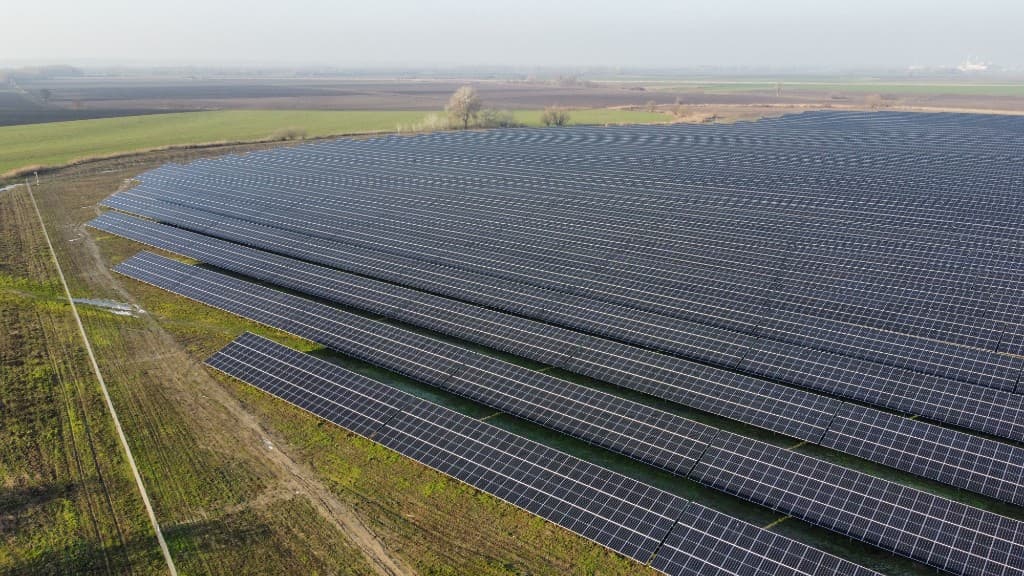
Most PM-KUSUM content explains the subsidy structure. Very little explains what actually happens between signing up and generating revenue, which is the part that determines whether a project reaches commissioning or stalls in year two.
This covers the build: what a Component A project requires, in what order, where the schedule genuinely breaks, and what to look for in a PM-KUSUM solar EPC company.
Which component are you actually building?
PM-KUSUM has three components, and they are different businesses. The confusion is worth clearing first, because the EPC scope varies enormously between them.
| Component | What it is | Nature of the EPC work |
|---|---|---|
| A | Decentralised ground-mounted grid-connected solar plants on barren, fallow or agricultural land, feeding the local substation under a long-term PPA with the discom | A full ground-mount power plant. Civil, structures, modules, inverters, HT works, evacuation, metering |
| C1 | Solarisation of existing individual grid-connected agricultural pumps | Small, highly repetitive installations across many sites. Logistics and compliance dominate |
| C2 | Solarisation of independent agricultural feeders | A plant sited near the feeder substation. Closest in nature to Component A, at feeder scale |
Component A is where most commercial developer interest sits: land is leased or owned, a plant is built near a substation with available capacity, and generation is sold to the discom. It is, in engineering terms, a ground mounted solar EPC project with a specific offtake structure attached. Component C2 follows similar logic at feeder level. Maharashtra's MSKVY 2.0 programme, which we cover in a separate scheme explainer, is the largest example of feeder solarisation in the country and now runs as a state scheme in its own right.
The rest of this article is about Component A.
The two constraints that decide everything
Before capital, before engineering, before anything: land and substation. Almost every failed PM-KUSUM project failed on one of these, and usually because they were assessed in the wrong order.
Substation capacity comes first
The plant must connect to a substation that has bay capacity available and headroom to absorb the generation. Capacity is finite, allocated, and changes as other projects are sanctioned. Confirming it is a matter of checking with the discom, not assuming.
The common and expensive mistake is aggregating land first because a parcel was available or family-owned, then discovering the nearest substation is full or too far. Land can sometimes be changed. A substation cannot.
Then land, and its paperwork
Land needs to be within workable distance of that substation, contiguous enough to lay out an array efficiently, and clean on title. Because these are typically projects for a solar power plant on agricultural land, the questions that surface are conversion status, tenancy and inheritance records, access and right of way for the evacuation line, and whether lease terms run at least as long as the PPA. A twenty-five-year offtake sitting on a fifteen-year lease is a financing problem waiting to happen.
The commercial spine: allocation and PPA
Capacity under Component A is allotted through state-level processes run by the discom or the state nodal agency, and the tariff is generally discovered competitively under a regulator-approved ceiling. The output is a long-term solar PPA with the discom.
The PPA is worth reading properly rather than treating as boilerplate, because three clauses shape the engineering that follows: how generation is measured and what happens during grid unavailability, whether curtailment is compensated, and what the commissioning deadline is with what consequences for missing it. A design optimised without reading these is optimised against the wrong constraint.
Timelines under the scheme have been revised more than once, and extensions have applied to specific project vintages rather than universally. Check the current position for your allocation rather than relying on a general figure.
Financing, where most projects actually stall
This is the honest answer to why PM-KUSUM capacity sanctioned and PM-KUSUM capacity commissioned are different numbers. Projects clear allocation, then sit at financial closure.
Lenders want evidence that the project will generate what the model claims and will be built on time. That means a credible generation estimate, clean land documentation, confirmed evacuation, and a contractor or delivery partner with a track record they recognise. Weakness in any one of those slows sanction, and slow sanction eats the commissioning window that the PPA does not extend.
Sequencing helps more than persuasion here. Getting the technical documentation right before approaching lenders is faster than approaching lenders and then producing documents on request. Subsidy structures, lender requirements and disbursement mechanics under PM-KUSUM warrant their own treatment, and SLNKO supports developers through the loan process as part of project delivery.
Evaluating a site? If you have a state, a land parcel and a nearest substation in mind, we can give you an indicative view on viability before you commit capital. Start your PM-KUSUM enquiry
Engineering, procurement and construction
Detailed engineering and the DPR
The detailed project report is what the lender reads and what the contractor prices against. It should carry a real resource assessment, a geotechnical picture of the actual site rather than a regional assumption, a validated single-line diagram, and a generation estimate that survives scrutiny. A weak DPR inflates cost under every delivery model, because a contractor pricing uncertainty prices it conservatively. Engaging a capable design and engineering partner before contracting is the cheapest risk reduction available on a project of this size.
Procurement and content rules
Module sourcing under PM-KUSUM is governed by ALMM listing and, in several state programmes, domestic content requirements (DCR). Where DCR applies it affects both price and lead time, and the specification needs fixing early. A module substitution late in the programme can disturb the layout, the structure design and the generation estimate simultaneously. Confirm the applicable rules for your state and allocation before ordering.
Construction and evacuation
The plant itself is well-understood work. The part that slips is outside the fence: the evacuation line, the bay at the substation, way-leave permissions, and utility scheduling for charging. These sit partly with the discom, which means they cannot be compressed by adding site labour. They can only be protected by starting them early.
Commissioning, then twenty-five years
Commissioning is a milestone, not an end. The asset then has to perform for the life of the PPA, which makes handover documentation, as-built drawings, test reports, spares definition, warranties, worth specifying in the contract rather than requesting afterwards. Decide how operations and maintenance will be handled before construction finishes, not after.
A realistic sequence
Durations vary widely by state and project, so treat this as ordering rather than a schedule.
| Stage | What it involves | Runs in parallel with |
|---|---|---|
| Substation and land assessment | Bay capacity confirmation, parcel identification, title and conversion review | Nothing, this gates everything |
| Allocation and PPA | Application or bid, letter of award, PPA execution | Preliminary engineering |
| Engineering and DPR | Survey, geotech, layout, SLD, generation estimate | Financing preparation |
| Financial closure | Lender appraisal, sanction, documentation, first disbursement | Long-lead procurement planning |
| Procurement | Modules, inverters, structures, transformers, cables | Civil works and site mobilisation |
| Construction | Civil, structures, module installation, electrical, HT works | Evacuation line and bay works |
| Testing and commissioning | Pre-commissioning checks, metering, charging, COD | O&M mobilisation and handover |
Where PM-KUSUM projects go wrong
- Land secured before substation capacity was confirmed. The single most common and most expensive error, because it is usually discovered after money has been committed.
- Title and conversion issues surfacing after allocation. Agricultural parcels carry tenancy, inheritance and conversion complications that take months to resolve and cannot be compressed.
- Financial closure treated as a later step. It depends on documentation produced during engineering, so preparing for it late costs the commissioning window.
- Evacuation scope underestimated. The line, the bay and the way-leaves sit outside the plant but inside the deadline, and partly outside your control.
- Generation assumptions taken from a template. Where the tariff is fixed, yield is the entire return. A regional average is not a site assessment.
Choosing how to deliver it: EPC or EPCM
PM-KUSUM EPC projects are delivered both ways, and the right structure depends on the project rather than on a general rule. A lump-sum EPC contract transfers cost, schedule and performance risk to one contractor for a fixed price, which suits a frozen scope and an owner without an internal technical team. An EPCM service arrangement keeps the vendor contracts with the owner and pays a fee for engineering, procurement and construction management, which gives line-item cost visibility and suits portfolios where scope is still maturing.
What tends to matter more than the label: how many separate procurement packages the project involves, whether the design is frozen, and whether the owner has someone empowered to make decisions during the build. Our comparison of solar EPC and EPCM models works through the trade-offs, including where each genuinely wins.
Developers building several PM-KUSUM sites often use a hybrid, engineering and procurement managed centrally, with construction packages let as fixed-price contracts once each site's design is settled.
Selecting a PM-KUSUM EPC partner
Five questions that separate a capable partner from a persuasive one, whichever contracting model you choose. Whether you need a contractor or a PM-KUSUM consultant for engineering-led delivery, ask these before you sign.
- Have you commissioned a PM-KUSUM plant in this state? State-level processes, discom practice and land rules vary. National experience is not the same as state experience.
- Who runs this project, and what else are they running? Capability sits with people, not brochures. Ask for the project manager by name.
- What does your evacuation scope include? The most common source of scope disputes on these projects. Get it written down.
- How do you handle module substitution? ALMM and DCR positions change. You need to know whether the contractor can substitute without your consent.
- What transfers at handover? Drawings, test reports, warranties, spares. Under-specified almost universally, and it determines how expensive year six is.
Planning a PM-KUSUM project?
SLNKO Energy has delivered over 1.6 GW of PM-KUSUM capacity across 11 states, including Odisha's first PM-KUSUM plant and Chhattisgarh's first Component A project, backed by more than 10 GW of solar delivered overall. We work as an engineering-led EPCM and PMC partner from land and substation assessment through engineering and DPR, procurement, construction and long-term O&M.
Have land and a substation in mind? Send us the state, approximate land available and nearest substation. We will come back with an indicative view on viability before you commit capital. Start your PM-KUSUM enquiry
Model the returns: SLNKO ROI Calculator | See delivered projects: View portfolio
If you are evaluating commercial or industrial offtake rather than a discom PPA, our C&I solar work is the closer fit.
Phone: +91 62025 28672 | WhatsApp: +91 87962 60069 | Email: Contact us
Frequently asked questions
What does a PM-KUSUM solar EPC company actually do?⌃
Delivers the plant from engineering through commissioning, detailed design, procurement of modules, inverters, structures and electrical equipment, civil and electrical construction, evacuation works, testing and commissioning. Scope varies by contracting model: a lump-sum EPC contractor carries the whole scope at a fixed price, while an EPCM partner manages engineering, procurement and construction with the owner holding vendor contracts directly.
What is PM-KUSUM Component A?⌃
The component covering decentralised ground-mounted grid-connected solar plants built on barren, fallow or agricultural land near a distribution substation, with generation sold to the discom under a long-term power purchase agreement. Components C1 and C2 cover solarisation of existing agricultural pumps and of independent agricultural feeders respectively.
Can a solar plant be built on agricultural land under PM-KUSUM?⌃
Yes, the scheme is designed around barren, fallow and agricultural land. Conversion requirements, tenancy records and lease tenure vary by state, and lease terms should run at least as long as the PPA. Resolve documentation before financial closure, not during it.
What is the biggest cause of delay on PM-KUSUM projects?⌃
In practice, two: substation capacity confirmed after land was already committed, and financial closure treated as a step after engineering rather than alongside it. Evacuation scope, the line, the bay and way-leaves, is a close third, because it sits partly with the discom.
Is EPC or EPCM better for a PM-KUSUM project?⌃
It depends on how many procurement packages the project involves, whether the design is frozen, and whether the owner has an empowered decision-maker available during construction. Lump-sum EPC gives price certainty and single-point accountability; EPCM gives cost visibility and flexibility on evolving scope. Multi-site developers often use a hybrid.
How long does a PM-KUSUM Component A project take to build?⌃
Construction itself is not the long pole, land documentation, financial closure and evacuation approvals are. Total elapsed time depends heavily on how much of that groundwork is complete before the PPA is signed. Confirm the commissioning deadline in your PPA and work backwards from it.
Are DCR modules required under PM-KUSUM?⌃
Module sourcing is governed by ALMM listing, and domestic content requirements apply in several state programmes. Because the position varies by state and by allocation, confirm the applicable rule before procurement, it affects both price and lead time.
What should I check before signing an EPC contract?⌃
Performance guarantee basis and the weather dataset it is measured against, the cap on liquidated damages, whether the contractor can substitute specified modules without consent, who carries grid connection risk, the defects liability period, and exactly which drawings, test reports, warranties and spares transfer to you at handover.
Scheme parameters, subsidy structures and timelines under PM-KUSUM are set by MNRE and implemented through state nodal agencies, and vary by state and project vintage. Verify current requirements for your state before making commercial decisions. For scheme-level detail and to discuss a project, see our PM-KUSUM page. Figures current as of 4 September 2026.